
As a Michigan homeowner, you’ll want to thoroughly inspect your roof before winter sets in. Check for damaged shingles, clear debris, and guarantee proper insulation and ventilation in your attic. Address any leaks or structural issues promptly to prevent costly water damage. Upgrade to weather-resistant roofing materials for added protection against harsh winter conditions. Stay proactive to safeguard your home – there’s more you can do to winterize your roof.
Key Takeaways
- Conduct a thorough roof inspection before winter to address any missing, cracked, or curled shingles and inspect flashing for damage or leaks.
- Clear debris from the roof and gutters to prevent water damage, rot, and potential roof collapse under heavy snow loads.
- Ensure proper attic insulation and ventilation to maintain energy efficiency, regulate home temperature, and prevent ice dams.
- Assess the structural integrity of roof trusses and beams, and seal any identified leaks to protect against water intrusion.
- Upgrade to weather-resistant roofing materials, such as metal or slate, to enhance protection against Michigan’s harsh winter conditions.
Inspecting for Roof Damage
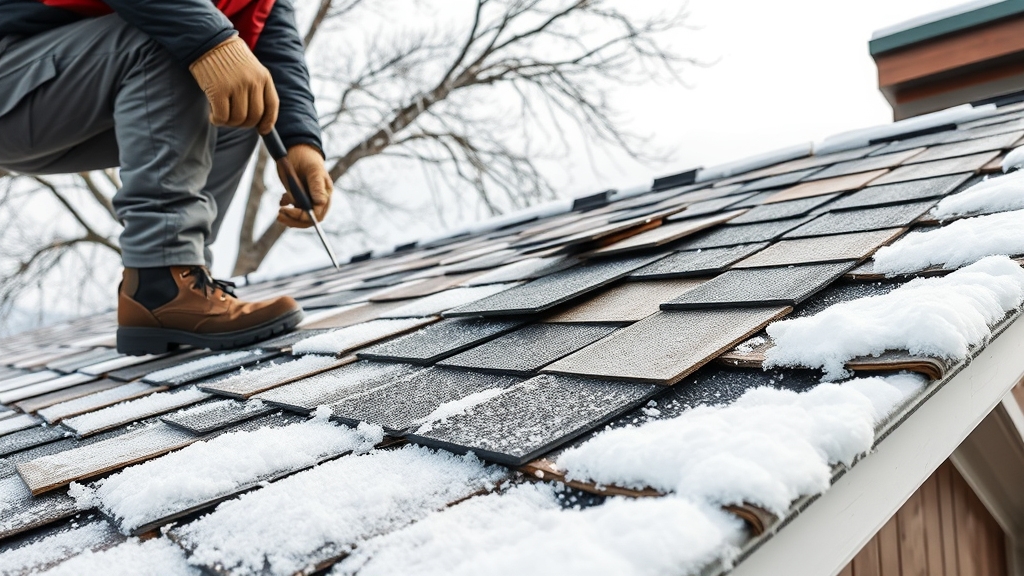
As the colder months approach, it’s crucial to inspect your roof for any signs of damage.
Carefully examine your roof for missing, cracked, or curled shingles that could lead to leaks and water damage during heavy snowstorms. Look for loose or damaged flashing around chimneys, vents, and skylights.
Additionally, check for signs of roof sagging, which may indicate structural issues. Inspect your gutters and downspouts, ensuring they’re clear of debris to allow proper drainage and prevent ice dams.
Inspect for roof sagging, which may signal structural issues. Clear gutters and downspouts to prevent ice dams and ensure proper drainage.
A thorough roof inspection can help you identify and address any problems before the harsh winter weather arrives, protecting your home from costly storm-related damage.
Clearing Debris and Leaves

One of the most important steps in preparing your roof for Michigan’s harsh winters is clearing away any accumulated debris and leaves. Leaf removal and dealing with debris accumulation on your roof should not be overlooked, as these can lead to serious issues if left unaddressed.
| Task | Importance | Frequency |
| Clearing Leaves | High | Annually |
| Removing Debris | High | Annually |
| Inspecting Gutters | Moderate | Annually |
| Repairing Damage | High | As Needed |
Neglecting to clear your roof of leaves and debris can result in water damage, rot, and even the collapse of your roof under heavy snow loads. Take the time to thoroughly inspect and clean your roof before winter arrives to guarantee its longevity and your family’s safety.
Maintaining Proper Attic Insulation
Proper attic insulation is essential for maintaining a comfortable and energy-efficient home during the winter months. The attic is a critical area for insulation, as it helps prevent warm air from escaping through the roof.
Consider the types of insulation available, such as fiberglass batts, blown-in cellulose, or spray foam. Each has its own advantages, so evaluate your attic space and choose the best option.
Verify the insulation covers the entire attic floor, including any access hatches or ductwork. Proper insulation not only keeps the attic air from seeping out, but it also helps regulate the temperature throughout your home, reducing your energy costs.
Ensuring Adequate Attic Ventilation
While maintaining proper attic insulation is essential, ensuring adequate attic ventilation is equally important for safeguarding your roof during Michigan’s harsh winters. Proper airflow in your attic prevents heat buildup, which can lead to ice dams and subsequent water damage.
Consider installing ventilation systems like ridge vents, soffit vents, or powered attic fans to promote efficient attic airflow. The following table outlines common attic ventilation options and their benefits:
| Ventilation System | Benefits |
| Ridge Vents | Continuous airflow, low maintenance |
| Soffit Vents | Intake fresh air, complement ridge vents |
| Powered Attic Fans | Improved air circulation, energy-efficient |
Prioritizing attic ventilation, alongside insulation, will help protect your roof and home from the harsh Michigan winters.
Identifying and Repairing Leaks
Inspect your roof regularly to locate any leaks.
Use high-quality sealants and caulks to properly seal any identified leaks.
Maintaining a leak-free roof is essential to protecting your home from water damage during the winter months.
Locate Rooftop Leaks
Where are the most common areas on your roof that are prone to leaks?
Look closely at the flashing around chimneys, vents, and skylights. These are common trouble spots.
Also inspect the roof edges, valleys, and penetrations, as these are vulnerable to water intrusion.
Perform a moisture assessment by looking for discolored shingles or water stains inside the attic.
For a thorough leak detection, use a garden hose to saturate the roof and observe where water is entering your home.
Identifying and locating the source of leaks is essential before repairing them.
Properly addressing rooftop leaks now will help prevent major damage during the harsh Michigan winters.
Seal Leaks Properly
Once you’ve identified the source of any rooftop leaks, it’s time to seal them properly.
Start by cleaning the affected area thoroughly, removing any dirt, debris, or loose material.
Then, apply weather-resistant sealants designed for roof repairs. Carefully follow the manufacturer’s instructions to guarantee a proper, long-lasting seal.
Avoid using regular caulk, as it may not withstand the harsh Michigan winters. Instead, opt for sealants formulated to expand and contract with temperature changes.
Apply the sealant in a smooth, even layer, making sure to cover the entire affected area.
With the right sealing techniques, you can prevent further leaks and protect your roof from the elements.
Inspect Regularly
Regularly inspecting your roof is essential to identifying and addressing any potential leaks before they escalate. Follow a seasonal checklist to thoroughly examine your roof for signs of wear and tear.
Climb up safely or use binoculars to inspect the shingles, flashing, and gutters. Look for cracked, curled, or missing shingles, and check for proper drainage. Confirm the flashing around chimneys, skylights, and vents is in good condition.
Clean the gutters and downspouts to prevent clogs that can lead to water backup. Address any issues promptly to avoid costly repairs down the line.
Regular roof inspections can help you stay ahead of problems and keep your home protected during Michigan’s harsh winters.
Preventing Ice Dam Formation
Proper insulation is key to preventing ice dam formation.
Make certain your attic is well-ventilated to keep temperatures low and minimize melting snow.
Additionally, regular gutter maintenance can help divert water away from your roof.
Insulation Importance
Because proper insulation is essential in preventing the formation of ice dams, you’ll want to guarantee your attic and roof are well-insulated before winter sets in.
Consider different insulation types, such as fiberglass, cellulose, or spray foam, to maximize energy efficiency and keep your home warm.
Make certain insulation is installed correctly, with no gaps or compression, to effectively retain heat and block cold air from entering.
By investing in quality insulation, you’ll not only avoid costly ice dam damage but also enjoy lower energy bills throughout the colder months.
Ventilation Strategies
In addition to adequate insulation, proper roof ventilation is essential in preventing the formation of damaging ice dams.
Ventilation strategies for your roof include:
- Ridge vents: Allowing hot air to escape from the attic
- Soffit vents: Providing fresh air intake to promote airflow
- Gable vents: Enhancing cross-ventilation and reducing moisture buildup
- Roof fans: Actively drawing hot air out for improved airflow
- Attic fans: Pulling stale air from the attic and pushing it out
Gutter Maintenance
Cleaning your gutters before winter arrives is essential for preventing the formation of damaging ice dams. Inspect your gutters for debris and consider upgrading to metal or seamless gutters, which are less prone to clogs.
When cleaning, use a ladder or gutter cleaning tool to safely remove leaves, twigs, and other buildups. Dispose of the debris properly and guarantee downspouts are clear, allowing water to flow freely away from your home.
Performing this seasonal gutter maintenance will help mitigate the risk of ice dams, which can lead to water damage and costly repairs. Staying on top of this simple task will protect your roof and prevent headaches down the line.
Reinforcing Roof Structures
Your roof’s structural integrity is vital, especially as the winter season approaches.
Reinforcing your roof structure is important to withstand the heavy snow loads and strong winds that Michigan’s harsh winters often bring. Consider the following steps to guarantee your roof is ready:
- Inspect your roof trusses and beams for any signs of wear, damage, or sagging. Address any issues promptly to maintain structural integrity.
- Consult a professional for a thorough structural integrity assessment if you have concerns about your roof’s stability.
- Reinforce your roof trusses with additional bracing or support if necessary, focusing on areas prone to stress.
- Verify your roof is properly insulated to prevent ice dams and reduce the load on the structure.
- Consider upgrading to impact-resistant roofing materials for added protection against the elements.
Upgrading to Winter-Ready Roofing Materials
Upgrading to weather-resistant roofing materials is the next step in preparing your home for the harsh Michigan winters.
Invest in energy-efficient materials like metal, slate, or impact-resistant asphalt shingles. These durable roofing options can withstand heavy snow, ice, and high winds, ensuring your home’s protection.
Metal roofs, for instance, reflect solar heat, reducing energy costs. Slate is impervious to rot, mold, and fire, providing long-lasting performance. Asphalt shingles with impact-resistance rating can handle hail and other storm damage.
Consider your budget, roof pitch, and local building codes when selecting the best roofing solution. Upgrading now will safeguard your home and provide peace of mind throughout the winter season.
Protecting Gutters and Downspouts
Cleaning your gutters is essential for preventing clogs and water damage to your home.
Positioning your downspouts properly guarantees rainwater is directed away from your foundation.
Don’t overlook these simple steps when preparing your roof for winter.
Gutter Cleaning Importance
As the seasons change and winter approaches, properly maintaining your gutters and downspouts becomes essential to protecting your home from potential damage.
Clogged or damaged gutters can lead to water buildup, ice dams, and costly roof and foundation issues.
Here’s why gutter cleaning is so important:
- Prevents water damage: Properly functioning gutters channel rainwater away from your home’s foundation, siding, and windows, reducing the risk of leaks and water intrusion.
- Avoids ice dams: Cleared gutters allow melting snow and ice to flow freely, preventing ice dams from forming and causing roof damage.
- Protects your landscaping: Redirected water can erode soil and damage your yard, gardens, and plantings.
- Extends the life of your roof: Properly maintained gutters help prevent premature wear and tear on your roofing materials.
- Saves you money: Addressing gutter issues early can avoid costly repairs down the line.
Downspout Positioning Impact
Proper downspout positioning plays an essential role in safeguarding your gutters and home. Verify your downspouts direct water at least 6 feet away from your foundation.
Incorrectly positioned downspouts can cause water damage, basement flooding, and erode the soil around your home. Consider extending downspouts with flexible leaders or underground drainage pipes to improve drainage efficiency and prevent issues.
Regularly inspect downspouts for clogs and make adjustments as needed. Proper downspout placement protects your investment and prevents costly repairs down the line.
Taking the time to optimize your downspout positioning is a smart way to prepare your roof for Michigan’s harsh winters.
Scheduling Annual Roof Maintenance
Scheduling annual roof maintenance is essential to secure your home’s protection throughout the winter months.
By proactively maintaining your roof, you can identify and address any issues before they escalate, preventing costly repairs and potential damage.
The benefits of annual roof inspections include:
- Identifying and repairing minor problems before they worsen
- Guaranteeing proper drainage and preventing ice dams
- Detecting and addressing any structural weaknesses or damage
- Extending the lifespan of your roof
- Providing peace of mind and preventing unexpected surprises
Scheduling this maintenance at the end of the fall season guarantees your roof is ready to withstand the harsh winter conditions.
Don’t wait until it’s too late – take the necessary steps to safeguard your home.
Frequently Asked Questions
How Do I Prevent Snow Buildup on My Roof?
To prevent snow buildup on your roof, regularly remove snow using a roof rake or shovel. Improve your roof insulation to minimize heat loss, which can cause snow to melt and refreeze, leading to ice dams.
What Are the Signs of a Weak Roof Structure?
Sagging, cracking, or leaking are signs your roof structure’s integrity is weak. Watch for these indicators and address them promptly to prevent costly damage from Michigan’s harsh winters.
How Can I Extend the Life of My Roofing Materials?
To extend the life of your roofing materials, regularly inspect and maintain them. Clear debris, trim nearby trees, and address any issues promptly. Proper maintenance can help your roof withstand Michigan’s harsh winters.
When Is the Best Time to Schedule Roof Maintenance?
The best time for roof maintenance is in the fall. This allows you to prepare your roof for winter’s harsh conditions and extend the life of your roofing materials. Schedule a professional inspection and any necessary repairs before the winter weather sets in.
How Do I Protect My Gutters From Ice Dams?
Protect your gutters from ice dams by installing gutter guards and using ice melt. This helps prevent ice buildup, ensuring proper drainage and reducing the risk of water damage to your home.
Final Thoughts
Preparing your roof for Michigan’s harsh winters starts with proactive care—seasonal roof inspections, clearing debris, strengthening insulation and ventilation, and addressing leaks or weak spots before temperatures drop. Winter weather in Troy can magnify even minor issues, but a well-maintained roofing system keeps your home dry, energy-efficient, and structurally protected. Upgrading to durable, weather-resistant materials and reinforcing key components ensures your roof can handle heavy snow, ice dams, and freezing winds with confidence.
Want a professional winter-readiness assessment before the cold sets in? Book a comprehensive roof inspection or request a roof replacement estimate with Troy Roofing Pros. Explore our full services for residential and commercial roofing, or reach out through our contact page to secure your appointment. Call (248) 587-8250 or email admin@roofingtroy.com today to winterize with confidence.